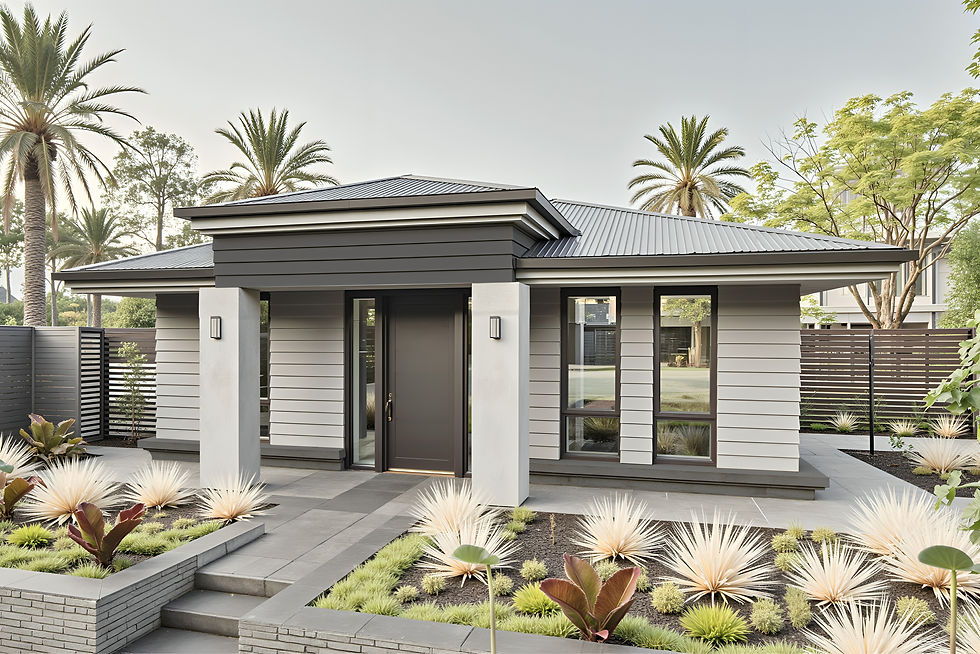
Granny Flat Rules in Brisbane: Council Approval, Size Limits & What has Changed in 2026

One of the biggest questions Brisbane homeowners ask before building a granny flat is:
Do I actually need council approval?
For most people, the answer is no, provided the granny flat meets certain requirements.
Brisbane City Council’s rules for secondary dwellings are more straightforward than many homeowners expect. This guide explains what applies to Brisbane properties in 2026, including size limits, approval requirements and the key rule change that made granny flats more attractive as rental investments.
What Does Brisbane City Council Call a Granny Flat?
Under the Brisbane City Plan 2014, a granny flat is officially referred to as a secondary dwelling.
A secondary dwelling is a self-contained residential unit located on the same lot as the main home. It is usually smaller than the main dwelling and can include its own bedroom, bathroom, kitchen and living area.
A secondary dwelling may be:
Detached from the main house, such as a separate structure in the backyard
Attached to the main house, such as a connected extension
In simple terms, it is an additional dwelling on the same property that is designed to function independently while remaining secondary to the main home.
The Key Rule: 80 m² Maximum Size
In Brisbane, a secondary dwelling is generally considered accepted development if it meets the relevant planning requirements.
This means a development application to Brisbane City Council is usually not required if the secondary dwelling is:
No more than 80 m² in gross floor area
Located within 20 metres of the main dwelling
The 80 m² size limit is one of the most important rules to understand when planning a granny flat in Brisbane.
Dixon Homes has more than 40 granny flat designs that sit at or below 80 m², giving Brisbane homeowners a wide range of options that may suit the accepted development pathway.
If your proposed granny flat is larger than 80 m² or located more than 20 metres from the main house, you may need to lodge a development application. This can add extra time, consultant involvement and approval costs to the project.
What Changed in 2022 and Why It Matters
Before September 2022, Queensland rules generally meant a granny flat could only be occupied by a member of the same household as the main dwelling. This meant homeowners could not usually rent the granny flat to an unrelated tenant.
That changed on 26 September 2022, when the Queensland Government removed restrictions on who can occupy a secondary dwelling.
As a result, Brisbane homeowners can now rent a granny flat to any tenant on the open rental market, provided the property meets the relevant planning, building and tenancy requirements.
This change was significant because it transformed granny flats from family-only accommodation into a much stronger investment option for homeowners looking to generate rental income.
Do You Need Any Approval at All?
Even if your granny flat meets the accepted development criteria, you will still need building approval from a licensed building certifier.
Building approval confirms that the dwelling meets the relevant construction standards, including the Building Code of Australia. It is different from a development application and is usually more straightforward for standard, compliant granny flat designs.
If you plan to rent out the granny flat, the property must also comply with relevant rental property requirements, including residential tenancy legislation, fire safety requirements and smoke alarm regulations.
In most cases, you do not need:
A development application to Brisbane City Council, provided your design meets accepted development requirements
Body corporate approval, unless your property is part of a body corporate arrangement
For a standard house and land property in Brisbane, the main approval pathway is usually building approval through a licensed certifier.
How to Check If Your Block Qualifies
Before choosing a granny flat design, it is important to confirm whether your block can accommodate a secondary dwelling under the Brisbane City Plan.
The key checks include:
Zoning
Use the Brisbane City Plan 2014 interactive mapping tool to confirm your property’s zoning. Many residential zones allow secondary dwellings, but it is still important to check your specific property.
Lot Size
Brisbane City Council does not prescribe a minimum lot size for secondary dwellings in the same way some other South East Queensland councils do.
However, your block still needs to physically accommodate the dwelling, provide suitable access and meet the relevant setback requirements.
Setbacks
Minimum setbacks from fences, boundaries and other structures may apply. These requirements can depend on your zoning, lot shape, dwelling location and site layout.
A Dixon Homes site assessment, available from $250, can help identify these requirements before you commit to a design.
Overlays
Some properties are affected by overlays, such as flood, bushfire, heritage or character requirements. These overlays may add extra design, engineering or approval considerations.
Checking overlays early can help avoid delays later in the process.
What About Other South East Queensland Councils?
The 80 m² rule and accepted development pathway discussed in this guide applies to properties within the Brisbane City Council area.
If your property is located in another South East Queensland council area, such as Moreton Bay, Logan, Ipswich, Redland, Gold Coast or Sunshine Coast, the rules may differ.
Many councils cap secondary dwellings at around 60 m² to 80 m², but minimum lot sizes, setbacks, occupancy rules and approval pathways can vary.
Dixon Homes can help confirm the requirements for your specific council area and match your block with a suitable granny flat design.
Steel Frame Construction and Long-Term Compliance
Another important consideration is how your granny flat is constructed.
Secondary dwellings may need to meet specific fire separation and acoustic requirements, particularly when they are attached to or located close to the main home.
Dixon Homes uses steel frame construction, which provides a strong and durable building solution. Steel is non-combustible and can perform well in fire separation assessments, making it a practical choice for long-term compliance and peace of mind.
The Bottom Line
For many Brisbane homeowners, building a granny flat in 2026 is a straightforward process when the design meets the relevant planning requirements.
In most cases:
No development application is required if the granny flat is under 80 m² and within 20 metres of the main house
The granny flat can be rented to anyone, with no family relationship restriction since September 2022
Building approval is still required through a licensed building certifier
A compliant design can help make the process faster and simpler
The best way to confirm whether your block is suitable is to book a proper site assessment.
Dixon Homes offers site assessments from just $250, and this cost is applied to your build if you proceed.
ALL PRICING IS BASED ON BRISBANE AREA RATES FOR FACADES IN THE DIXON HOMES OPTIONAL FACADES BOOKLET. PRICING IS SUBJECT TO CHANGE WITHOUT NOTICE E&OE 31.10.13 | www.dixonhomes.com
Exclusions unless otherwise specified: the construction contract does not provide for the following and/or similar items and/or their installation and/or any additional works to facilitate installation: Window furnishings; decorative light fittings; letter box; retaining walls; landscaping; fencing; driveways and paths; floor coverings; paving; fireplaces; soft furnishings; vehicles; any siteworks other than specifically stated in site estimate; any items not specified on inclusion lists and/or colour selections and/or plans, and not specifically costed in by the builder.
Dixon Homes and its employees do not provide, and are not qualified to provide, any financial, legal or taxation advice, and accepts no responsibility or liability for any financial decisions made by the client. Clients should obtain independent advice from their own solicitor, accountant, financial planner or other licensed professional, having regard to their personal circumstances, before entering into any contract or making any related financial commitment.